

CUBIC WATER · Sectors
Treatment plants for hotels
Hotels · Resorts · Tourism developments
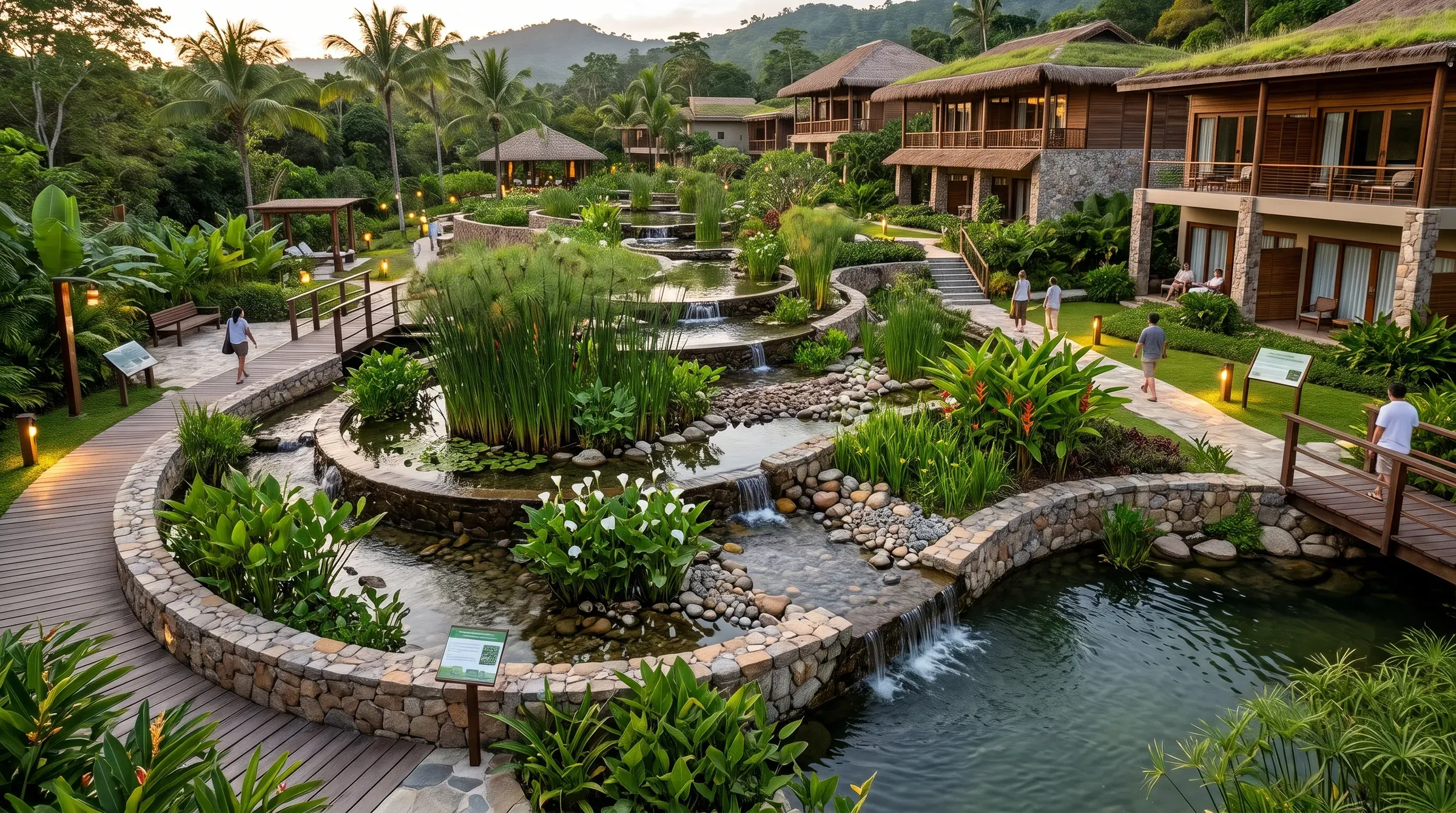
At a hotel, the treatment plant cannot smell, cannot be seen and cannot fail in high season. We design and operate systems that live up to your guests’ experience.
The real problems
A hotel’s challenges
A hotel does not produce wastewater like a house: it changes with occupancy, the kitchen and the season.
- 01
High-season peaks
Occupancy changes month to month and the plant receives very different flows and loads.
- 02
Kitchen and restaurant grease
Without proper pretreatment, grease clogs pipes and slows the biological process.
- 03
Odors near guests
An odor by the pool or restaurant turns into a negative review.
- 04
Beaches with no sewer
On the coast, the hotel treats all its water on site, often with a high water table and sandy soils.
- 05
Sustainability goals
Sustainable tourism programs and guests who value responsible water management.
- 06
Drinking water for irrigation
Gardens using drinking water that could be replaced with treated water.
Costa Rican regulations
What the regulations require
Verified against the official texts of Costa Rican regulations.
-
Irrigation and golf courses
Irrigating green areas and golf courses is urban reuse (type 1): a maximum of 1,000 fecal coliforms per 100 mL and 1 intestinal nematode egg per liter.
-
Discharge to rivers, estuaries or the sea
Requires a discharge permit from the Water Directorate and payment of the environmental fee, calculated on discharged COD and suspended solids.
-
Operating reports
Every six months for flows up to 100 m³/day and every three months above that; in SIRROAR and within 10 business days.
-
Never for human consumption
The regulation prohibits using treated wastewater for human consumption in all cases.
Sources: Decreto 33601-MINAE-S, Reglamento de Vertido y Reúso de Aguas Residuales · Decreto 40699-S-MINAE, frecuencia de reportes operacionales (La Gaceta, 3/11/2017) · Decreto 42128-MINAE-S, Canon Ambiental por Vertidos (SCIJ)
The solution
How we solve it
A discreet plant, sized for your real occupancy and operated year-round.
- 01 Designed for real occupancy Equalization to absorb high-season peaks without losing efficiency. Design and construction
- 02 Grease control Pretreatment of kitchen and restaurant water ahead of the biological process. Design and construction
- 03 Discreet plants Compact, covered or underground systems, out of guests’ sight and smell. Design and construction
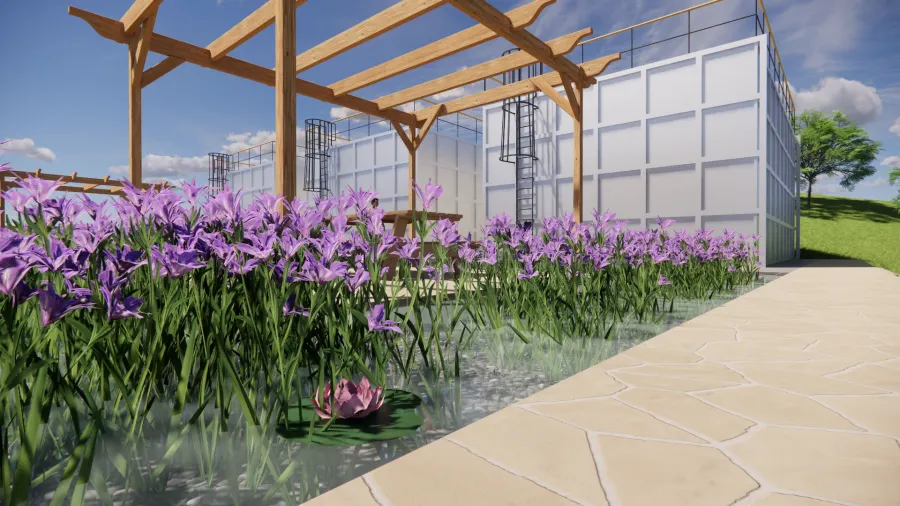
- 04 Reuse for irrigation Treatment and disinfection to irrigate gardens with treated water, or constructed wetlands for greywater. Design and construction
- 05 Year-round operation Certified operators and maintenance that does not disrupt hotel operations. Operation

Track record
Experience in tourist areas
Coastal and tourism plants designed and directed by our technical director, Eng. Róger Cubero Cascante, before founding CUBIC.
- Rancho Villa Real, Tamarindo
- 309 m³/day
- Torres de la Canela, Jacó
- 300 m³/day
- Marina Pez Vela, Quepos
- 100 m³/day
- Vista de Leona, Garabito
- 60 m³/day
Frequently asked questions
Frequently asked questions
What plant capacity does my hotel need?
It depends on the number of rooms, maximum occupancy, restaurants, laundry and staff. We design for the high-season peak and use equalization so the plant runs steadily year-round.
Can the hotel’s treated water be used for irrigation?
Yes, when treatment and disinfection reach the quality the regulations require for that reuse. It is one of the clearest ways to cut drinking water consumption.
How are odors near guests avoided?
With a properly sized plant, correct aeration, grease control, timely sludge wasting and covered structures. Odor is almost always a symptom of an operating failure.
Can you work on the plant without disrupting the hotel?
Yes. We plan rehabilitation and maintenance in stages and during lower-occupancy periods.
CUBIC WATER
Other sectors we serve



Get in touch
Let’s talk about your plant
Tell us what is happening: our engineers will propose the right solution.