
CUBIC STORE · Applications
Drinking water tanks
Water utilities · ASADAS · Municipalities
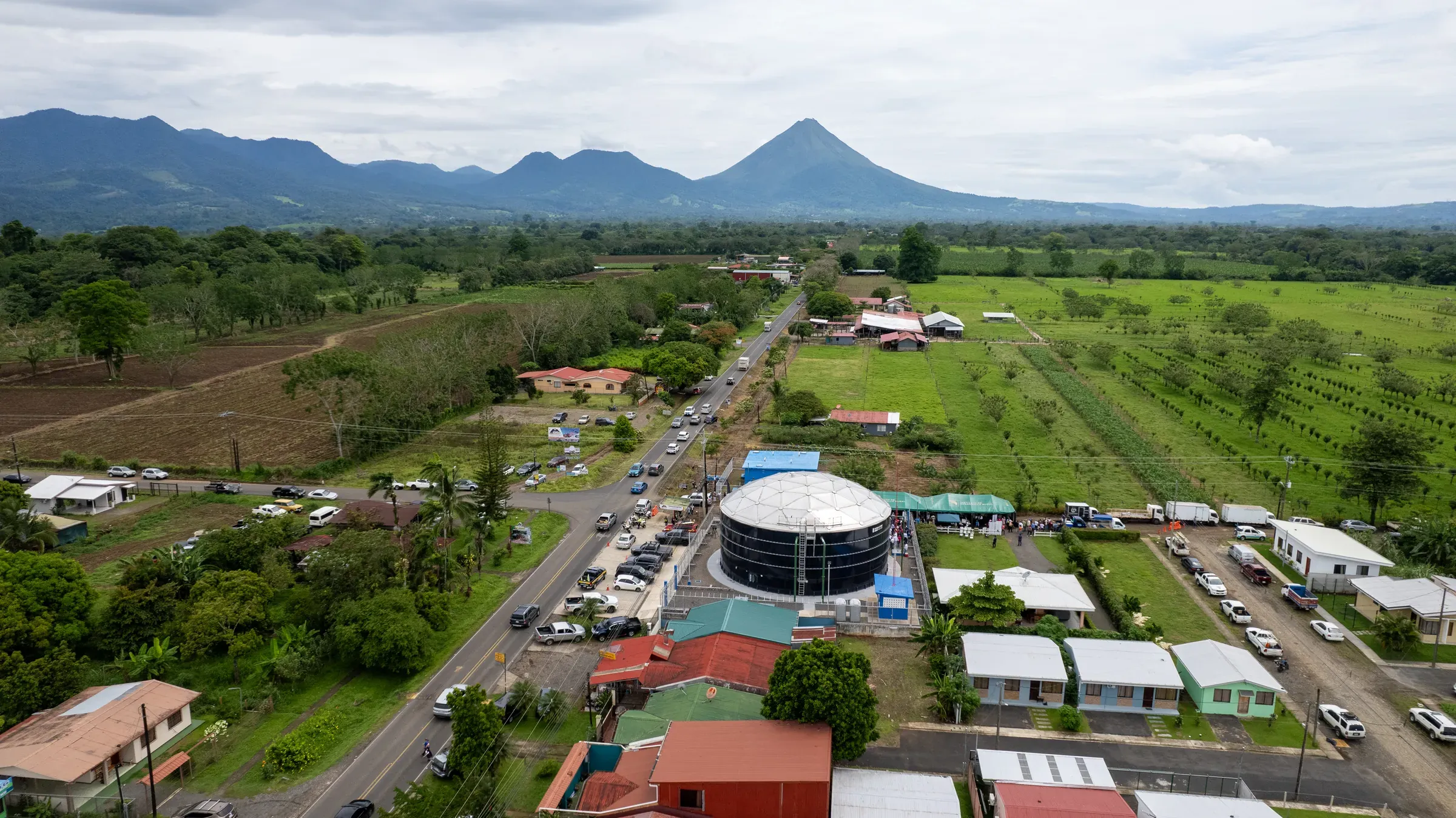
Safe storage for drinking water, with the most hygienic glass surface on the market and the experience of the water utilities that already trust CUBIC.
Water for human consumption
The reserve a water system needs
Drinking water demands a material that does not affect its quality. Glass-fused-to-steel is a hard, inert, smooth glass surface: it transfers no taste or odor, does not encourage bacterial growth and is easy to clean and disinfect.
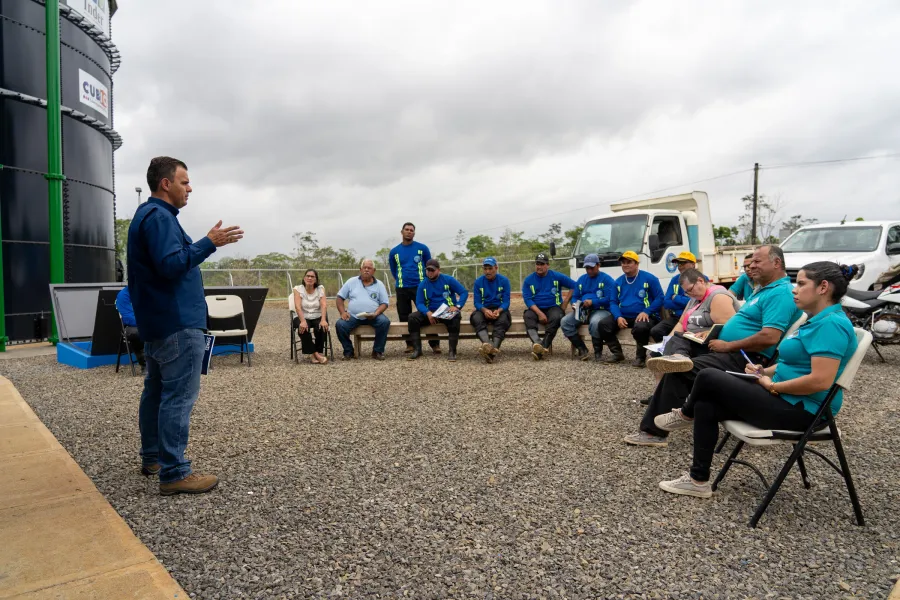
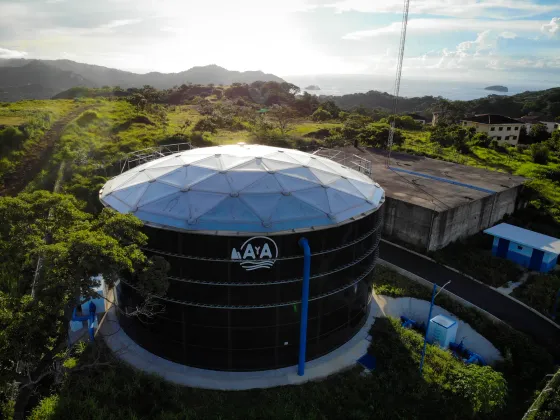
That is why AyA, INDER, municipalities and dozens of ASADAS (community water associations) store their water in Permastore® tanks installed by CUBIC. The manufacturer’s ISOFUSION® and TRIFUSION® tanks are NSF/ANSI/CAN 61 certified for contact with drinking water.
In Costa Rica, water system tanks are designed under the AyA technical standard: the volume must cover consumption balancing, a fire reserve when the design includes one, and an outage reserve. The 1,089 ASADAS with delegation agreements, which according to the Comptroller General serve about 21% of the population, also need AyA’s prior approval to expand or upgrade their systems.
-
Glass fused to steel
Factory-fired glass coating on both faces: never painted, never reapplied.
-
Modular and bolted
Fast, clean assembly with no site welding; expanded or relocated ring by ring.
-
Seismic design
Structures designed for wind and earthquake loads under the Costa Rican Seismic Code.
-
Single point of responsibility
CUBIC designs the foundation, installs and maintains: from calculations to commissioning.
Configurations
Where they are used
- Storage reservoirs Main storage for rural and municipal water systems.
- Elevated tanks and standpipes To pressurize gravity-fed distribution networks.
- Wells and springs Regulating water from deep wells, springs or surface intakes.
- Water treatment plants Chlorine contact, settling, filtration and treated water.
- Reverse osmosis and desalination Storage of permeate and desalinated water.
- Developments and condominiums Private reserves for residential projects, hotels and free trade zones.
What the AyA standard requires
- Total volume
- Balancing + fire + outage reserve
- Balancing without real demand curves
- 14% of average daily volume
- Outage reserve
- At least 4 hours of average daily flow
- Design period
- 25 years; in stages above 2,000 m³
- Materials
- Must not affect health; water must meet the Drinking Water Quality Regulation
- Seismic
- Essential tanks: Group A, importance factor 1.25 (Seismic Code)
ASADAS: steps for a new tank
- 1 · Technical study
- Water and hydraulic capacity, by a licensed professional (art. 44)
- 2 · Design
- Per the AyA standard and the Seismic Code
- 3 · Approval
- Prior AyA approval: 2 months, extendable by 2 (art. 45)
- 4 · Permits
- Drawings and building permits as applicable
- 5 · Construction
- Supply, foundation, erection and interconnection
- 6 · Commissioning
- Testing, disinfection and handover
Official sources Norma técnica para diseño y construcción de sistemas de abastecimiento de agua potable, de saneamiento y pluvial (AyA, La Gaceta, 2017; reformada en 2021) · Código Sísmico de Costa Rica 2010 (revisión 2014), tabla 4.1 (MIVAH) · Decreto 42582-S-MINAE, Reglamento de las ASADAS (Alcance 233, La Gaceta, 4/9/2020) · Contraloría General de la República, informe DFOE-SOS-IAD-00004-2026
Track record
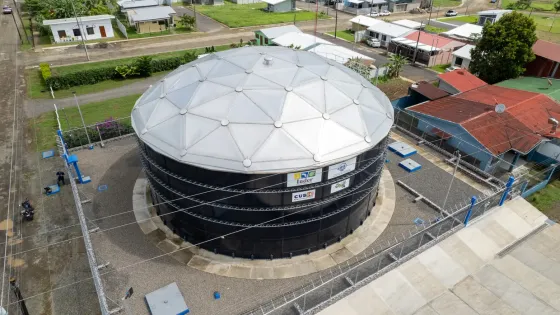
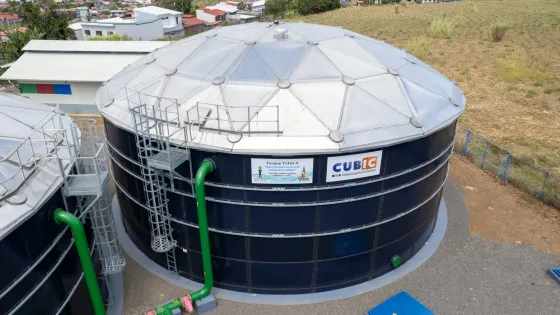
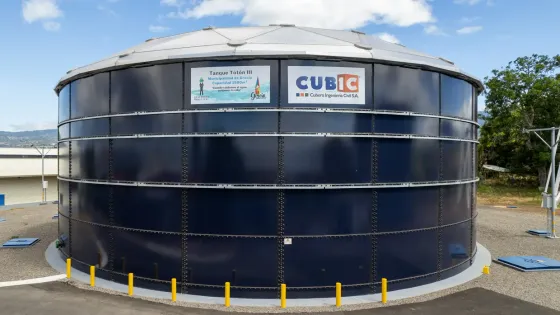
Drinking water for thousands of families
Permastore® tanks supplied and installed by CUBIC for AyA, INDER, municipalities and ASADAS.
- drinking water certification
- NSF 61
- design life (ISO 15686)
- 30 years
- expected service life
- 50+ years
- countries with Permastore® tanks
- 110+
Frequently asked questions
Frequently asked questions
Is glass-fused-to-steel safe for drinking water?
Yes. The coating is glass fused to steel: an inert surface that releases nothing into the water. Permastore® ISOFUSION® and TRIFUSION® tanks are NSF/ANSI/CAN 61 certified for contact with drinking water.
How is the volume of a drinking water tank calculated?
Under the AyA technical standard, total volume is the sum of three parts: consumption balancing (14% of average daily volume when no real demand curves exist), a fire reserve when the design includes one, and an outage reserve of at least 4 hours of average daily flow. The design period is 25 years.
What capacity does my water system need?
It depends on the population served, per-capita demand and the reserves required by the AyA standard. Our portfolio ranges from 200 to 5,000 m³ per tank in Costa Rican water systems; hydraulic design defines the right diameter and height.
Who approves an ASADA’s tank?
AyA. The ASADAS Regulation (Decree 42582-S-MINAE, art. 45) requires its prior approval for any upgrade or expansion project, within two months extendable by two more. First, the ASADA needs a technical study of water and hydraulic capacity (art. 44).
What does the Seismic Code require of a water tank?
The Costa Rican Seismic Code classifies essential water storage tanks in Group A, with an importance factor of 1.25. CUBIC designs each tank’s foundation and anchorage to that level.
How is it cleaned and disinfected?
The glass surface is smooth and non-porous, which makes periodic washing and disinfection easy. CUBIC FIX offers annual inspection and maintenance following the manufacturer’s protocols.
Can the reserve be expanded later?
Yes. Being modular and bolted, the tank can grow by adding rings of panels, or be relocated if the project requires it.
CUBIC STORE
More applications and guides
Get in touch
Let’s design your tank
Tell us the liquid, volume and site: our engineers will propose the right solution.