
CUBIC WATER · Sectors
Wastewater treatment for the food industry
Meat · Dairy · Beverages · Food
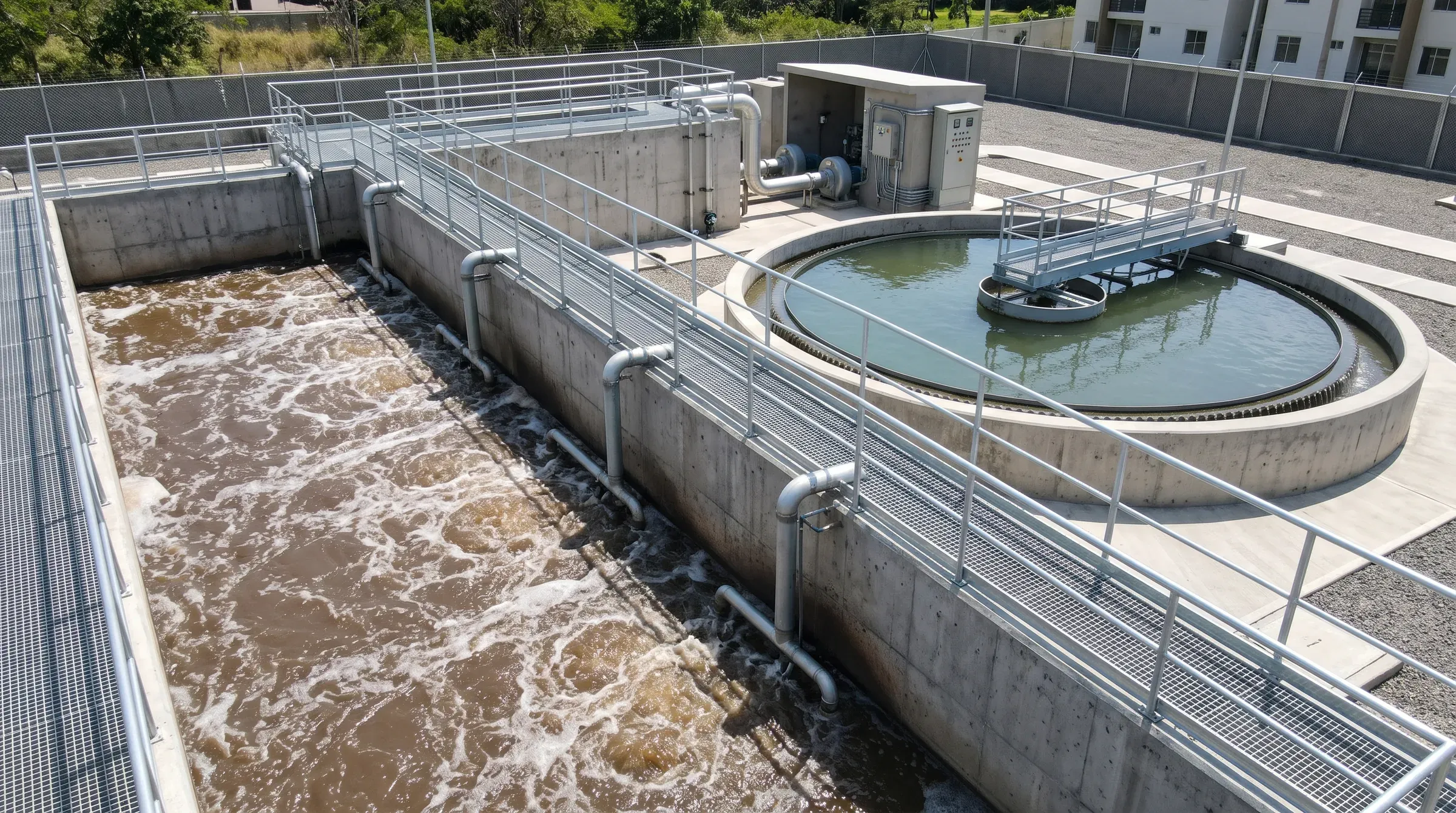
Blood, grease, sugars and chemical washdowns: food industry wastewater is among the most demanding. We know because we treat it for Sigma Alimentos and Industrias Cárnicas Integradas.
The real problems
Why your wastewater is different
A domestic plant is not built for this. These are the conditions that drive the design.
- 01
High organic load
BOD and COD often many times higher than domestic wastewater, requiring more biological capacity.
- 02
Grease, oil and solids
Blood, grease, protein and solids that overload the system if not removed first.
- 03
Washdowns and pH swings
Cleaning with chemicals and sanitizers that shift pH and can harm the biology.
- 04
Shifts and seasons
Flows and loads that change with every shift, product and season.
- 05
Growing production
The plant expands, but the treatment system keeps its original capacity.
- 06
Audits and customers
Certifications, corporate audits and customers demanding demonstrable environmental compliance.
Costa Rican regulations
What the regulations require
Verified against the official texts of Costa Rican regulations.
-
It is special wastewater
In addition to the universal parameters, complementary parameters are analyzed according to the activity’s ISIC code.
-
Dairy-specific limits
Dairy manufacturing has sector limits for discharge to a receiving body: BOD 200 mg/L, COD 500 mg/L and suspended solids 100 mg/L.
-
Several lines, monthly reports
If the plant receives water from different production lines, operating reports are monthly, regardless of flow.
-
Fee based on pollutant load
Those who discharge to a receiving body pay a fee calculated on COD and suspended solids: better treatment also costs less.
Sources: Decreto 33601-MINAE-S, Reglamento de Vertido y Reúso de Aguas Residuales · Decreto 40699-S-MINAE, frecuencia de reportes operacionales (La Gaceta, 3/11/2017) · Decreto 42128-MINAE-S, Canon Ambiental por Vertidos (SCIJ)
The solution
How we solve it
A treatment train designed for your process, not adapted from another.
- 01 Influent characterization We measure real flows and loads per shift before designing. Assessment and diagnosis
- 02 Pretreatment Screening and dissolved air flotation (DAF) for grease, oil and solids. Design and construction
- 03 Equalization and pH control We balance flow and load and neutralize ahead of the biology. Design and construction
- 04 Configurable biological treatment SBR, MBBR, IFAS or trickling filter, depending on load and available space. Design and construction
- 05 Modular expansion We grow with your production, in stages and without rebuilding the system. Design and construction
- 06 Operation and discharge control Certified operation and parameter monitoring to comply at every sampling. Operation

Track record
Food industry case studies
Plants we designed, built or assessed for some of Costa Rica’s most demanding food companies.
-
 Alajuela 460 m³/day Design and construction of the wastewater treatment plant (WWTP) expansion for Sigma Alimentos Costa Rica’s processed meat facility. View case
- Industrias Cárnicas Integradas 150 m³/day Construction and technical direction of the meat plant’s wastewater and process water treatment plant. View case
- Fruthos del Trópico 300 m² drainage field Design and construction of a septic tank and a 300 m² infiltration field to improve the wastewater effluent. View case
-
 Sigma Assessment Physical survey and assessment of the dairy plant’s wastewater treatment plant. View case
Frequently asked questions
Frequently asked questions
Why won’t a domestic plant work for my industry?
Because food industry wastewater has much higher organic loads, grease, solids and pH swings that a domestic plant is not designed to treat. Without pretreatment and equalization, the plant will not comply.
What information do you need to quote an industrial plant?
Hourly and per-shift flows, the production schedule, lab analyses of the wastewater (BOD, COD, TSS, fats and oils, pH), available space and the discharge point.
Can you expand the plant without stopping production?
Yes. Expansions are planned in stages to keep treatment running while new units are built.
What happens to the sludge and grease?
They are separated, thickened and stored for authorized disposal. Sludge handling is part of the plant design from the start.
CUBIC WATER
Other sectors we serve


Get in touch
Let’s talk about your plant
Tell us what is happening: our engineers will propose the right solution.