

Technical guide · Materials
What material should a water storage tank be made of?
Our recommendation: glass-fused-to-steel
The material defines how long construction takes, what the tank costs to maintain and how long it lasts. We compare the options on the market and explain why we recommend glass-fused-to-steel.
The short answer
Glass-fused-to-steel: the material that performs best
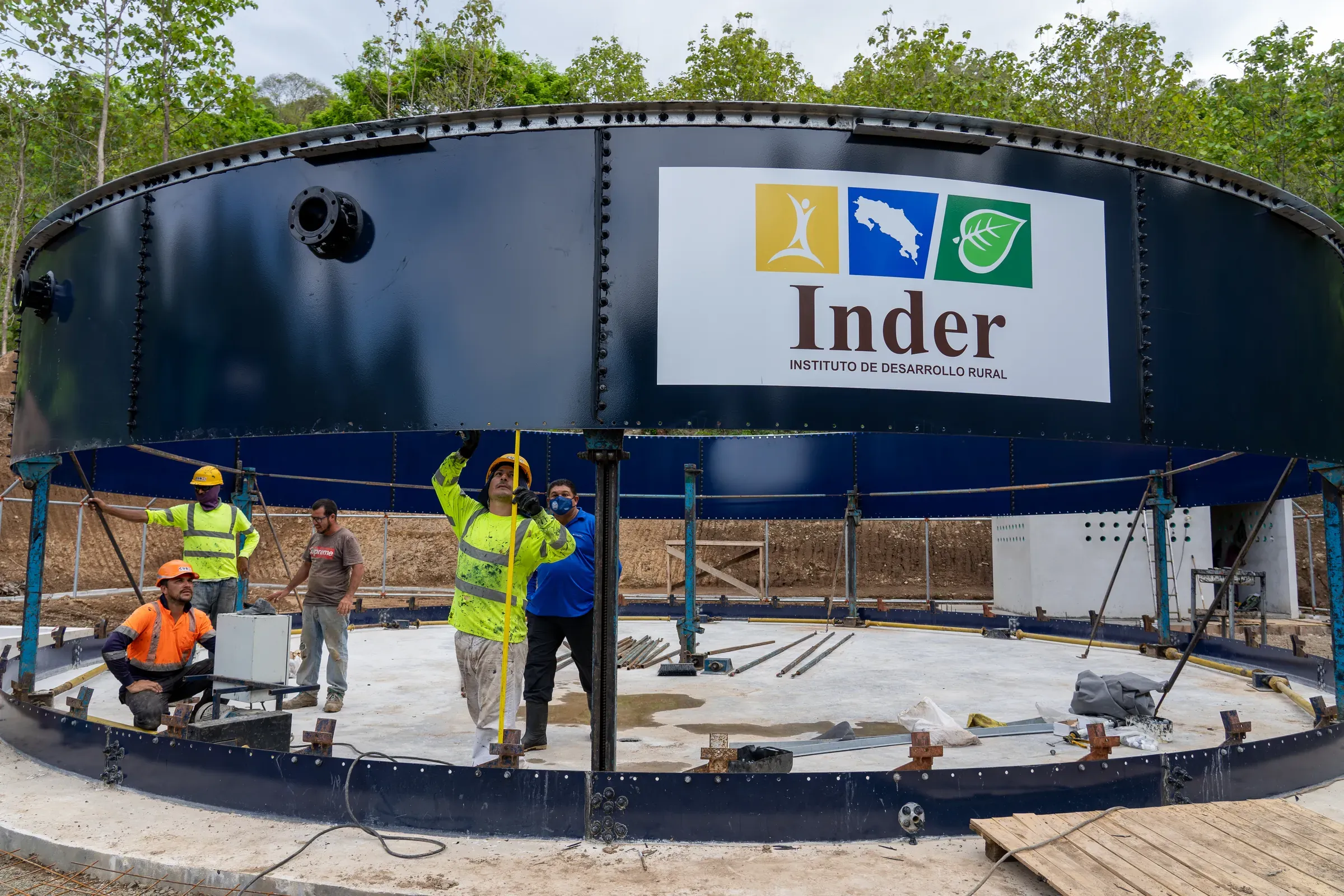
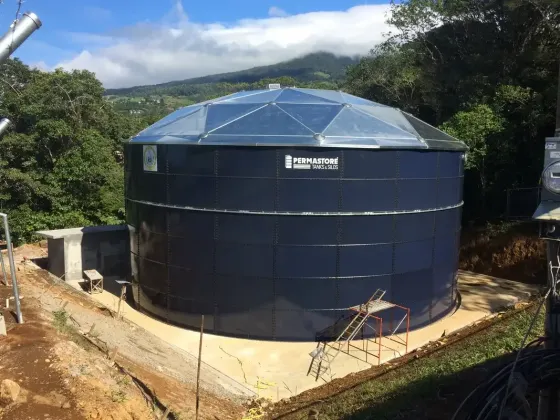
For medium and large water storage, glass-fused-to-steel combines the best of two materials: the structural strength of steel and the inert, smooth, hygienic surface of glass, fused at the factory on both faces. It is never painted or repainted and is erected from bolted panels, with no pouring or site welding.
The usual alternatives are cast-in-place concrete, painted welded steel and, for small volumes, plastic tanks. All of them can store water; the difference lies in construction time, the maintenance they need over decades and the option to grow when demand increases.
In a seismic country like Costa Rica, every tank must be designed together with its foundation and anchorage: the Seismic Code classifies essential water tanks in Group A, with an importance factor of 1.25. CUBIC designs both for every tank it installs.
-
Never repainted
Glass is fused to the steel at the factory: there is no paint to renew.
-
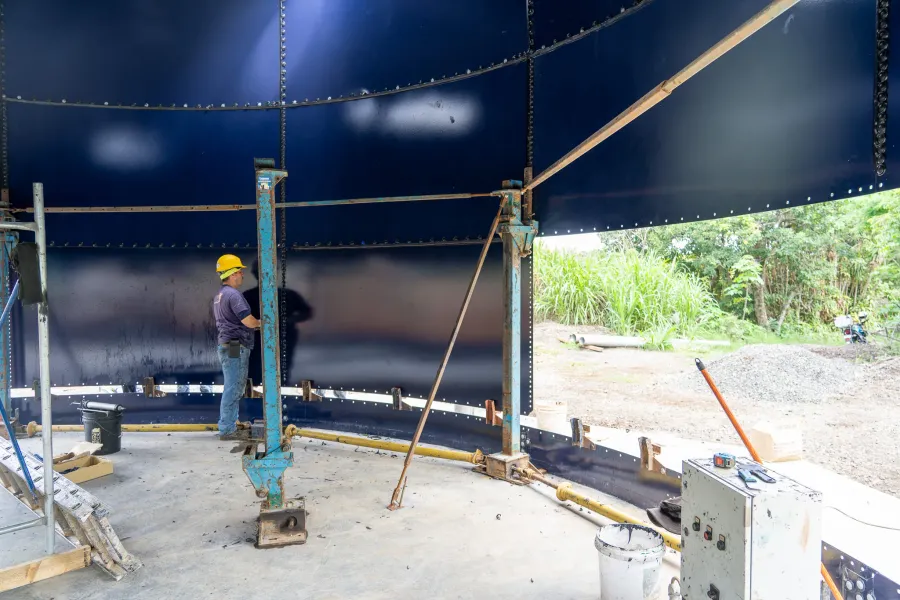
Erected in weeks
Prefabricated bolted panels, with no pouring, curing or welding.
-
Grows with demand
Expanded ring by ring, or dismantled and relocated.
-
Hygienic surface
Smooth, non-porous glass, easy to wash and disinfect.
Comparison
How each material compares
The six criteria that weigh most on the cost and life of a water tank.
- Construction time Glass-fused: factory panels bolted on site. Concrete: formwork, pouring and curing. Welded steel: site welding and painting.
- Maintenance Glass-fused: bolt and seal inspection, no paint. Concrete: joint sealing and crack repair. Welded steel: periodic repainting.
- Expansion Only a bolted tank grows by adding rings or can be relocated. With concrete or welded steel, more capacity usually means another tank.
- Drinking water Permastore® ISOFUSION® and TRIFUSION® tanks are NSF/ANSI/CAN 61 certified for contact with drinking water.
- Controlled quality The glass coating is applied and inspected at the factory, independent of site weather conditions.
- Plastic tanks Practical for small volumes; a community or industrial reserve would need many units.
Glass-fused-to-steel · recommended
- Standards
- AWWA D103 · EN ISO 28765
- Erection
- Bolted panels, no welding or pouring
- Coating
- Factory-fused glass, no repainting
- Service life
- 30-year design · 50+ in service
- Expansion
- By rings; can be dismantled and relocated
Cast-in-place concrete
- Standards
- ACI 350 · AWWA D110 / D115
- Erection
- Formwork, pouring and curing on site
- Maintenance
- Joints, seals and cracks
- Expansion
- Not practical: permanent structure
- Relocation
- Not possible
Painted welded steel
- Standards
- AWWA D100 · coatings AWWA D102
- Erection
- Site welding and painting
- Maintenance
- Periodic repainting
- Expansion
- Not practical
- Relocation
- Not practical
Track record
Why CUBIC chose glass-fused-to-steel
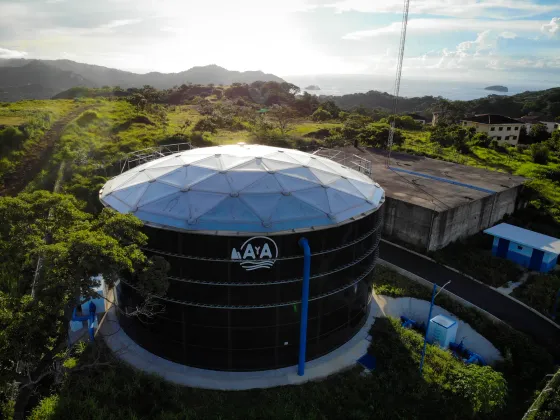
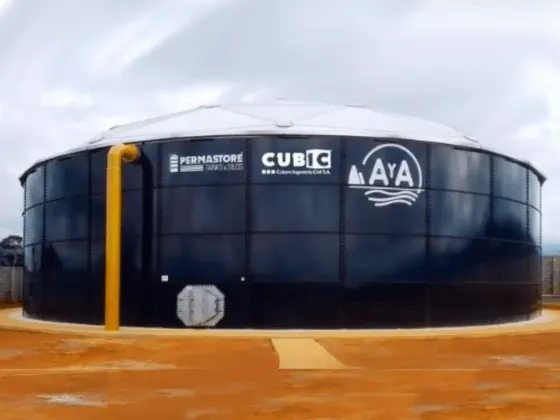
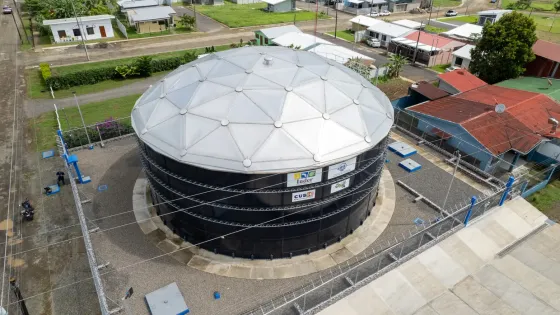
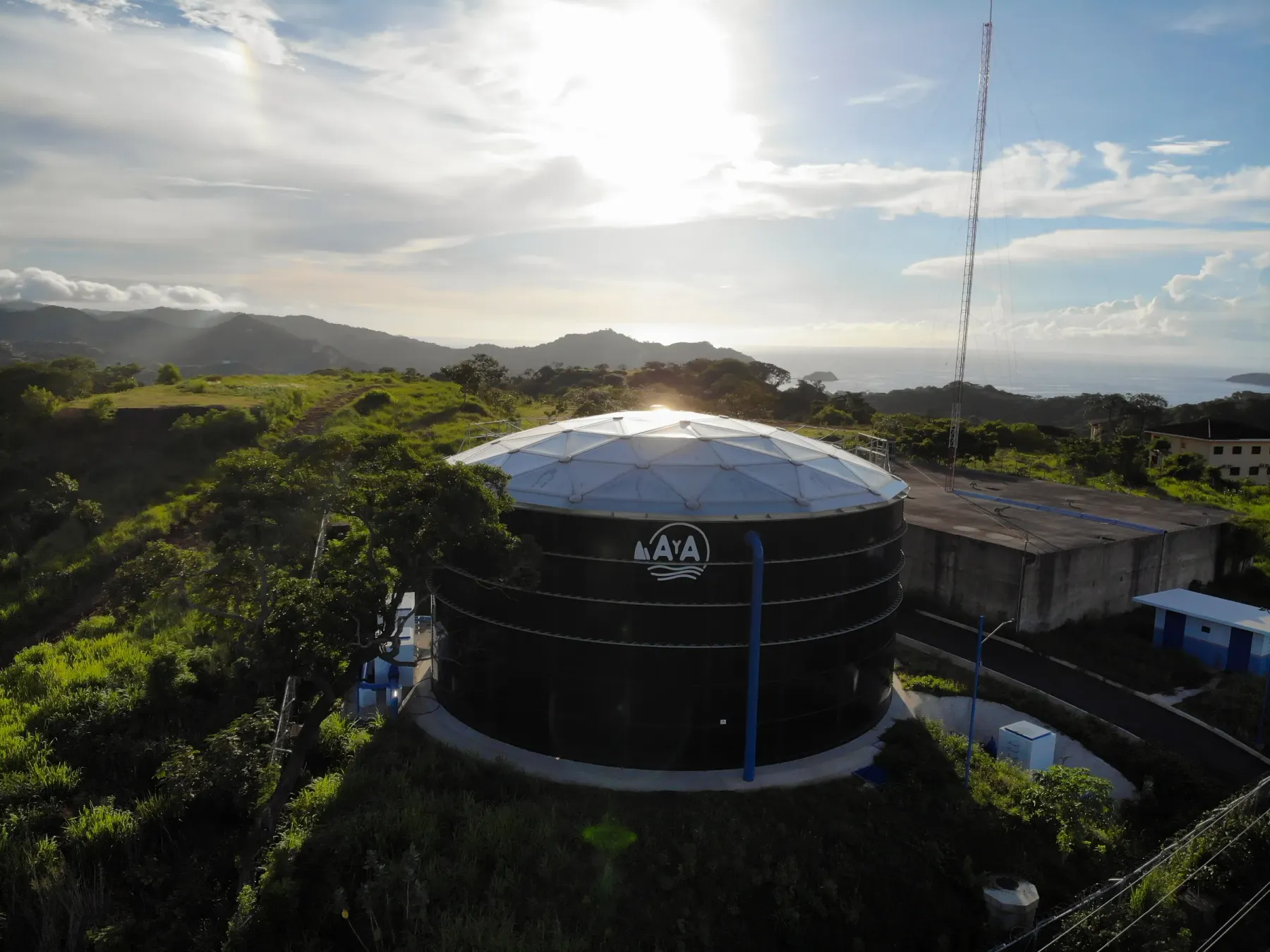
AyA water systems, INDER, municipalities, ASADAS and industries already store their water in Permastore® tanks installed by CUBIC: fast construction, zero repainting and capacity that grows with demand.
- design life (ISO 15686)
- 30 years
- expected service life
- 50+ years
- drinking water certification
- NSF 61
- countries with Permastore® tanks
- 110+
Frequently asked questions
Frequently asked questions
What material should a water tank be made of?
For medium and large storage we recommend glass-fused-to-steel: it is erected in weeks, never repainted, has a hygienic surface and can be expanded by rings. Permastore® tanks have a 30-year design life and more than 50 years of expected service according to the manufacturer.
Is a concrete or a glass-fused-to-steel tank better?
For an above-ground tank, glass-fused-to-steel offers faster construction with no pouring or curing, maintenance without painting or crack repair, and the option to expand or relocate. Concrete has its place in buried tanks or tanks built into a structure.
And compared with a painted welded steel tank?
Both are steel, but glass-fused tanks have glass fused at the factory on both faces and are never repainted. Welded steel is painted on site and depends on periodically renewing that paint system.
Are bolted tanks safe in an earthquake?
Yes, when the foundation and anchor bolts are designed for the design earthquake, as with any tank. CUBIC designs each tank’s foundation and anchorage to the Costa Rican Seismic Code.
Can an existing tank be expanded?
A bolted glass-fused-to-steel tank can grow by adding rings of panels, after reviewing the foundation and seismic design. With concrete or welded steel, expanding usually means building another tank.
Get in touch
Let’s design your tank
Tell us the liquid, volume and site: our engineers will propose the right solution.